
Our commissioning approach

Planning and investing for better health outcomes
Healthy North Coast commissions health services and programs to respond to the health needs of people and communities across the North Coast.
Commissioning is more than funding or purchasing services. It is a continuous process that helps us understand local health needs, work with communities and partners to design appropriate responses, invest resources where they can make the greatest difference, and monitor and evaluate whether those investments are achieving their intended outcomes.
Our approach supports services that are locally responsive, equitable, sustainable and connected to the broader health system.

What is commissioning?
As the Primary Health Network for the North Coast, one of Healthy North Coast’s core responsibilities is to commission primary health care services that respond to identified health needs, priorities and service gaps across our region.
We use evidence, local knowledge and the experiences of communities, health professionals and service providers to understand where investment is needed and what approaches are most likely to improve health outcomes.
Commissioning considers the full lifecycle of an investment, from understanding need and designing a response through to procurement, contracting, monitoring and evaluation. What we learn is then used to improve existing services and inform future planning and investment.
This means our commissioning decisions consider not only what services are delivered, but who they need to reach, what outcomes they should achieve and how they contribute to a more connected and effective health system.
Our planning and commissioning cycle
Healthy North Coast’s planning and commissioning cycle has five connected stages: Planning, Designing, Commissioning, Monitoring and Evaluating.
These stages form a continuous cycle. Evidence and learning gathered through monitoring and evaluation feeds back into our understanding of community needs, future planning and service design.
Community and lived experience, partnerships, evidence, equity and continuous improvement are considered throughout the cycle.
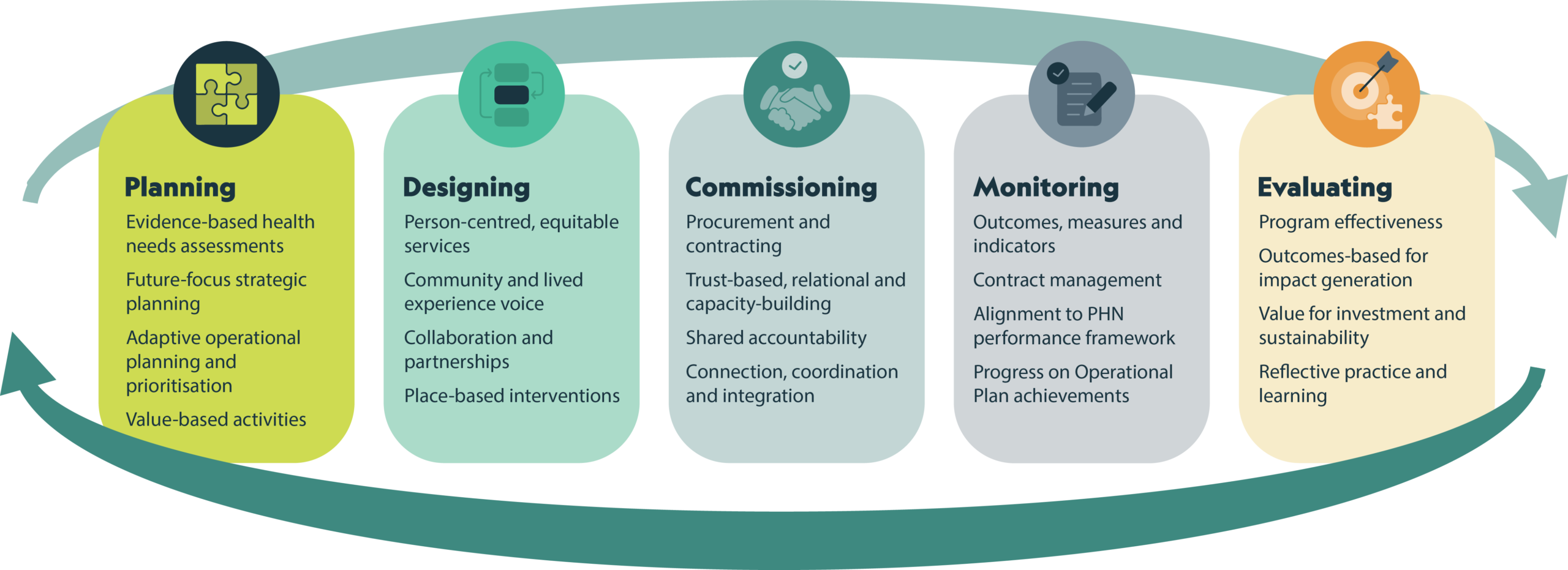
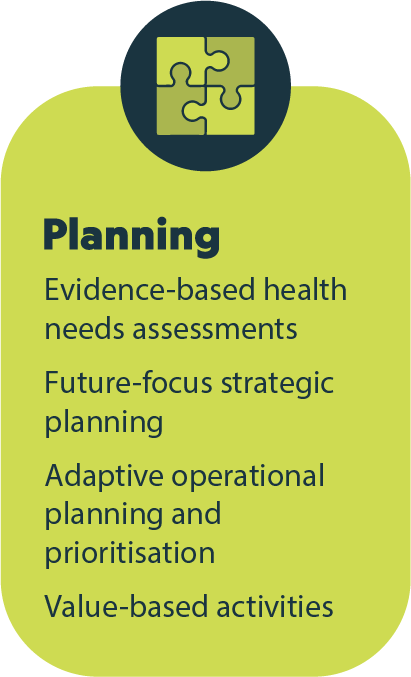
1. Planning
Understanding our communities and setting priorities
Effective commissioning starts with understanding the health and service needs of people living across the North Coast.
We bring together population health data, research, service information, local knowledge and the experiences of communities and health professionals. This helps us understand current and emerging health needs, identify gaps in services and access, and determine where investment can have the greatest impact.
Our Health Needs Assessment is an important foundation for this work. Together with strategic and operational planning, it helps us establish priorities, consider existing services and system capacity, identify opportunities for better coordination and ensure investment is directed towards areas of greatest need.
Planning considers how needs may change over time so that our commissioning decisions can respond to both current priorities and the future health needs of our communities.
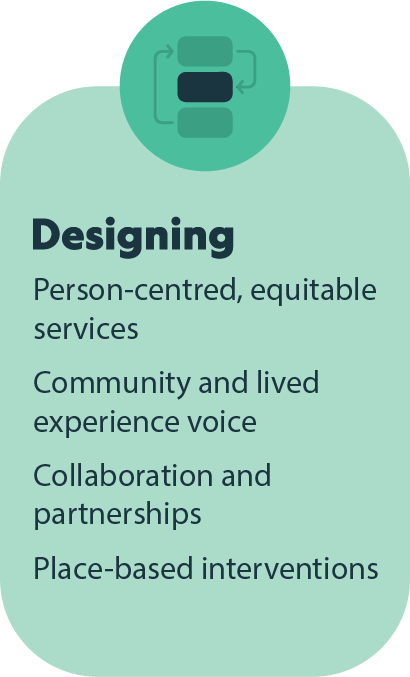
2. Designing
Designing services around people, place and need
Once a need or opportunity has been identified, we work to understand the most appropriate response and what a successful service or program should achieve.
Service design brings together evidence with the knowledge and experience of people who use, deliver and work alongside health services. Depending on the program, this may involve community members, people with lived experience, Aboriginal Community Controlled Health Organisations, general practice, health professionals, commissioned service providers, Local Health Districts and other community and health partners.
This helps us design services that are person-centred, equitable, culturally safe and responsive to the different communities and places across our region. It helps ensure new services complement existing care and contribute to a more coordinated health system.
Where appropriate, we use co-design and other forms of engagement to involve communities and partners in developing services, defining outcomes and identifying how success should be measured.
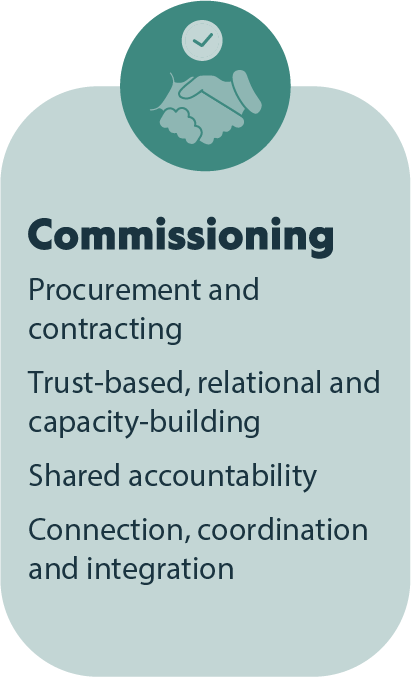
3. Commissioning
Turning priorities into services and programs
Once the need, service approach and intended outcomes have been established, Healthy North Coast determines the most appropriate way to commission the service or program.
This may include procurement and contracting, collaborative commissioning, partnerships or other approaches suited to the identified need and the local provider market.
Our approach aims to support transparent decision-making, value for investment and strong, sustainable services. We consider the capacity of the local service system and opportunities to strengthen relationships, coordination and integration between providers.
Commissioning does not end when a contract is signed. We work with commissioned providers throughout delivery to maintain shared accountability for outcomes, understand challenges, build capability and identify opportunities for improvement.
4. Monitoring
Understanding performance and progress
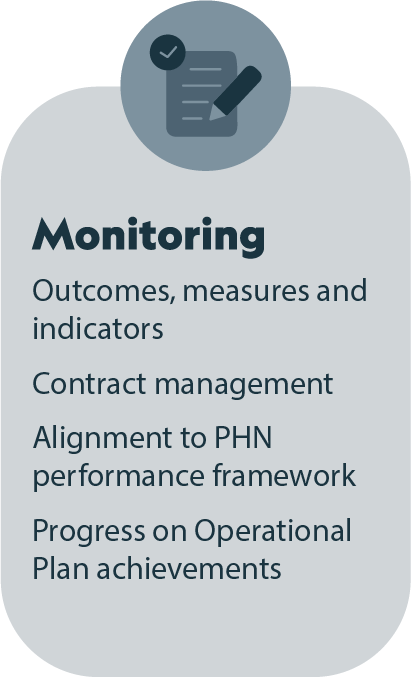
Monitoring helps us understand whether commissioned services are being delivered as intended, reaching the people and communities they were designed to support and progressing towards agreed outcomes.
We work with commissioned providers to review service activity, reach, access, quality, outcomes and progress against agreed measures and indicators. We consider contract performance, quality and safety requirements and alignment with Healthy North Coast’s strategic priorities and the broader PHN performance framework.
Monitoring is not simply about reporting against a contract. It creates an ongoing picture of how a service is performing and provides opportunities for Healthy North Coast and providers to discuss emerging issues, understand what is working and make improvements during the life of a program.
Information gathered through monitoring contributes to evaluation and future commissioning decisions.
5. Evaluating
Understanding impact and learning what works
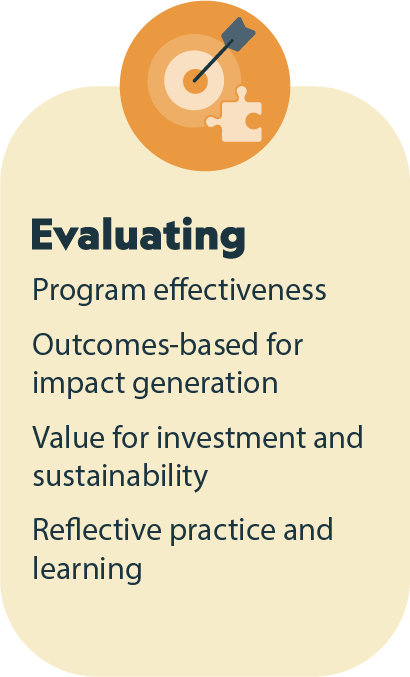
Evaluation helps us understand the difference our investments are making for people, communities and the health system.
Depending on the program, evaluation may consider whether the intended outcomes were achieved, how effectively the service reached the people it was designed for, the experience of people using the service and providers providing the service, equity of access, value for investment and whether the approach is sustainable.
Evaluation helps us understand why an approach worked, where improvements could be made and whether a successful model should be continued, adapted or expanded.
These findings contribute to organisational learning and future decision-making. They may lead to changes to an existing service, inform future investment or identify new questions that need to be explored through our Health Needs Assessment and planning processes.
Where appropriate, we share outcomes, insights and learnings so communities, providers and partners can better understand the impact of our commissioned programs.

A continuous cycle of improvement
Evaluation is not the end of the commissioning process.
What we learn through service delivery, monitoring, evaluation, community feedback and changes in population health needs feeds back into planning and the next commissioning cycle.
This allows Healthy North Coast to continually review where resources are invested, adapt services as needs change and build on approaches that are delivering positive outcomes.
In this way, planning, designing, commissioning, monitoring and evaluating work together as a continuous cycle of learning and improvement.
What guides our commissioning
Evidence-led
Our commissioning decisions are informed by evidence. We bring together population health data, research, service information, evaluation findings and local knowledge to understand need, identify priorities and determine how resources can have the greatest impact.
Community and lived experience
People and communities bring important knowledge about their health needs and experiences of care. We create opportunities for community and lived experience perspectives to contribute to planning, service design and evaluation so that commissioned services are responsive to the people they are intended to support.
Equity and place
Health needs and access to services differ across the North Coast. We consider geography, population groups, barriers to care and the social determinants of health when identifying priorities and designing responses. This supports investment that is responsive to the needs of different communities and places.
Partnership and integration
Improving health outcomes requires organisations to work together. We partner with communities, Aboriginal Community Controlled Health Organisations, general practice, primary care providers, Local Health Districts, commissioned service providers, governments and other organisations to support better coordinated and more integrated care.
Outcomes and impact
Our commissioning approach starts with a clear understanding of the change we are seeking to achieve. We establish outcomes and measures that help us understand whether services are making a difference and use this information to guide improvement and future investment.
Value and sustainability
We have a responsibility to use available resources effectively. Our commissioning decisions consider value for investment, sustainability, provider capability and how investment can contribute to lasting improvements in health and the broader health system.
Continuous learning
Commissioning is an ongoing process of learning and improvement. Evidence from monitoring, evaluation, providers and communities helps us understand what works, what needs to change and where future investment should be directed.

See where we invest
Healthy North Coast is committed to making it easier for communities, providers and partners to understand where we invest funding, why services and programs have been commissioned and what they are intended to achieve.
Our Commissioned Services and Health Programs directory brings together information about programs and initiatives commissioned or supported by Healthy North Coast. It provides greater visibility of our investment across the region, including the communities and locations programs support, the health priorities they respond to and available information about their outcomes.

From evidence to impact
Our commissioning cycle connects evidence, investment and outcomes.
Our Evidence and Insights hub brings together information about health needs across the North Coast, evaluation findings, program outcomes, data, insights and stories. This helps demonstrate the impact of our work, contributes to shared learningand provides evidence to inform future planning and commissioning.
Together, our Health Needs Assessment, Commissioned Services and Health Programs directory and Evidence and Insights hub provide a clearer picture of the journey from understanding health needs, to investing in solutions, to measuring the difference those investments make.